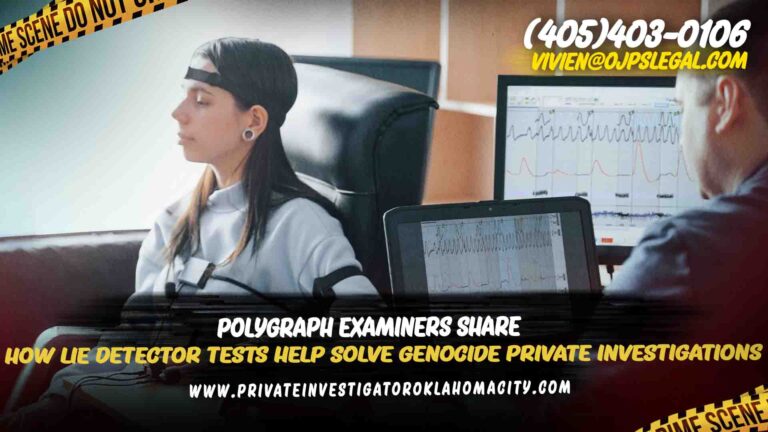
Polygraph examiners play important roles in private detective investigations through lie detector tests. Furthermore, these professionals reveal the truth of the complex criminal cases in a systematic and scientific manner. Moreover, polygraph examination includes physiological reactions such as heart rate and blood pressure. Additionally, respiration changes and skin conductivity changes when subjects answer targeted questions. Therefore, this type of scientific approach is invaluable in cases where one is investigating genocide-related crimes and witness credibility is needed. Furthermore, polygraph examiners have shown that they are successful in differentiating effective means of distinguishing statements made by truthful people from statements made by deceivers. Moreover, they deal with cases involving high-stakes situations concerning mass atrocities with exceptional competence and caring.
Understanding Lie Detectors in Genocide Investigations
Genocide investigations require exceptional accuracy in identifying truthful witnesses and guilty perpetrators correctly. In addition, polygraph examiners use sophisticated ways to evaluate if subjects give truthful testimony. Moreover, they measure whether there is truthfulness and completeness in the testimony describing crimes against humanity. In addition, lie detector tests work on continuous monitoring of physiological indicators. Therefore, these indicators usually change when people try to lie when they are questioned. Furthermore, such examinations are important tools in an investigation that determines facts in cases. Moreover, eyewitness accounts have a tremendous and direct determining factor in the prosecution of genocide cases. In addition, polygraph examiners also administer three separate types of questions during polygraph testing procedures. Therefore, pertinent questions are made directly about alleged crimes against humanity and the perpetrators. In addition, control questions set baseline responses for the accurate comparison and analysis. Moreover, irrelevant questions confirm the function of the equipment and the examiner’s testing procedures.
How Polygraph Examiners Gain Credibility
Private investigation agencies have polygraph examiners on staff who use them to verify the statements of witnesses remarkably accurately. Furthermore, examiners perform extensive pre-test interviews with them where they build rapport and fully explain procedures. In addition, this preparatory phase helps avoid subject anxiety, thereby ensuring accurate baseline measurements. In addition, the examiner describes how lie detector tests measure involuntary responses. Therefore, there is a measurement of physical responses rather than conscious attempts to fabricate answers. Furthermore, polygraph examiners identify patterns of deception even if subjects are trying to manipulate.
During testing, polygraph examiners are constantly monitoring the data with special testing equipment that records data. Moreover, the examiner nowadays observes significant deviations from baseline responses, which indicate deceit. Furthermore, sophisticated polygraph examiners know that no lie detector test can be 100 percent accurate. In addition, accuracy rates have been shown to be between 70 and 90 percent in most cases. Therefore, accuracy depends on the expertise of the examiner and on the circumstances in each case to a large extent. Moreover, reliable results are possible for polygraph examiners in the investigation of genocide with cooperation. Furthermore, subjects must be tested in cooperative settings for accurate testing results.
Applicability of a Genocide Case in Real Life
Polygraph examiners were made internationally famous during the great genocides around the world. Furthermore, the establishment of FBI agents according to polygraph examiners in Nairobi who were investigating Rwandan genocide perpetrators. Moreover, they analyzed financial networks financing perpetrators of genocide and criminal firms. Additionally, lie detector tests proved witness credibility in these important investigations. Therefore, polygraph examiners affirmed testimony against persons alleged to finance genocide. Furthermore, the courts in India have authorized polygraph examiners to conduct polygraph tests in the 1984 Sikh genocide cases. Moreover, the courts accepted the value of this polygraph technology as an investigative tool in its totality.
These applications illustrate the way that polygraph examiners have meaningful contributions to make to justice processes. Furthermore, lie detector tests help separate the credible witnesses from compromised sources. Moreover, this distinction turns out to be important when informants have financial incentives to lie. In addition, polygraph examiners record the results of the examination, providing objective records in support of prosecution. Therefore, these records support later prosecution efforts in the field of genocide.
The Limitations Polygraph Examiners Accept
Professional polygraph examiners openly talk about lie detector test limitations in investigations. In addition, many jurisdictions do not allow polygraph test results as primary evidence in court. Moreover, as a matter of reliability concerns, courts decline to accept polygraph evidence conclusively. Additionally, examiners of polygraph tests admit that there are false positives and false negatives. Therefore, in about 10-30 percent of cases, depending on methodology, there is a false result in the examination. Furthermore, high stress when being questioned by genocists creates physiological responses to mimic deception. Moreover, honest subjects may come across as deceptive under a great deal of stress and fear.
Experienced polygraph examiners emphasize lie detector tests as investigative aids. Therefore, they are not used as definitive proof but as investigative tools. Furthermore, responsible examiners recommend combining polygraph results with corroborating evidence completely. Moreover, physical documentation, witness testimony, and forensic analysis support findings. On top of that, a polygraph examiner’s interpretation involves a lot of skills and training. Therefore, the variation in examiner qualifications has a significant impact on the accuracy of the test outcome of lie detector tests.
Critical Considerations of Private Investigations
Questions for selecting polygraph examiners for cases of genocide include placing an emphasis on certified professionals with training. Furthermore, qualified polygraph examiners have strict confidentiality to protect sensitive information that is obtained while testing. Moreover, reputable polygraph examiners continue in education to keep their knowledge up to date. In addition to this, they keep abreast of interrogation techniques and improvements in technology. It is therefore the responsibility of professional development examiners to ensure competence and reliability during their careers.
Organizations that have responsibilities regarding genocide investigation benefit from having a full understanding of polygraph examiner capabilities. Furthermore, private investigators use lie detector tests strategically in investigations. Moreover, polygraph examiners record specific examination procedures to permit accountability during examinations. In addition, documentation is used to support possible legal proceedings in genocide cases. Therefore, proper documentation ensures evidence admissibility in the courtroom and legal processes.
Conclusion
Polygraph examiners make a huge contribution to genocide private investigations with their systematic testing. Furthermore, they establish the credibility of witnesses and identify deceptive perpetrators with effective ways. Moreover, lie detector tests have documented limitations that should be acknowledged and taken into account. Additionally, experienced polygraph examiners understand the value of polygraph examinations if done properly for investigation purposes. Therefore, it has become increasingly important that private investigation agencies rely on polygraph examiners for justice. Furthermore, they promote justice in complex crimes of mass atrocities. Moreover, polygraph examiners have humanitarian purposes of distinguishing between truth and deception. Additionally, they help solve humanity’s most serious crimes with the help of science.
Contact Our Certified Polygraph Examiners
Contact our certified polygraph examiners today for professional lie detector testing services. Our experienced team specializes in genocide related cases and criminal investigation cases. Reach out to see what our polygraph examiners can do to help forward your investigation. We offer accurate, reliable lie detector tests to support your private investigations.