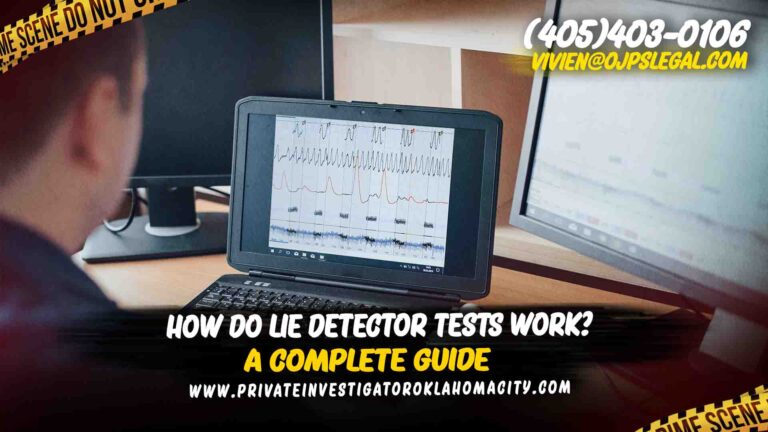
A lie detector test appointment in Oklahoma City can appear confusing at first. Movies give us the illusion of machines that can expose every deception. The test is much more systematic than this since it doesn’t test for deception directly. It measures several of the body’s physical responses while asking a set of well-designed questions.
Familiarizing yourself with how polygraph testing functions will certainly relieve anxiety about undergoing the test. It’s a good step if you need to take a lie detector test in OKC due to personal disagreement or otherwise.
What Is a Lie Detector Test?
A lie detector test is also known as a polygraph. It utilizes machinery to detect physiological activity while a person goes through an examination by means of structured questions. The machine has the ability to track many physical responses. The most common responses it tracks are breathing, heart rate, and skin conductance.
The exam involves taking some physiological measures while the examiner asks a predefined list of questions. It can generate a chart showing some of those measures over time. The machine does not know if someone is telling a lie. It just supplies an examiner with raw physiological data.
A polygraph is not mind-reading. It cannot see the thought, memory, or intention at hand. What it can do is show physiological responses occurring as a result of the questioned issues. These responses can be related to any number of things and require expert interpretation.
The Science Behind the Polygraph
Testing relies partly on our bodies’ automatic physiological and emotional responses to stress. Under stress, activation of the autonomic nervous system is possible. This leads to different reactions, with the result of changing blood pressure, heart rate,e and skin conductance.
It is these latter kinds of changes that the polygraph records during questioning. The scientific problem here is that deception is by no means the only stimulus that causes physiological arousal. Accusing a person of telling the truth in serious circumstances can make them nervous. On some occasions, an immediate reaction may occur because the question relates to an upsetting experience or a highly emotive issue.
Another person could have the “perfect” deceptive answer but stay relatively unreactive during the physical examination. This is why there is no single physiological response that determines whether someone is lying. The examiner must look at the pattern throughout the whole examination.
What Does the Polygraph Measure?
A polygraph usually tests these three categories, and the first is the breathing part. The body chart uses chest and stomach sensors to measure breathing changes. The second area measured is circulation. From the equipment, one can get pulse information as well as blood pressure data.
The third type is electrodermal activity (EDA). EDA is based on measurements of electrical conductivity in the skin that correspond with the activation of sweat glands. It also indicates physiological arousal, but none of them individually means you are not being truthful.
It might show up as a person hyperventilating from nervousness. Their heart could beat fast with anxiety about the potential outcomes of the test. The examiner evaluates overall reactions, not a single one. That sort of systematic evaluation is one of the key reasons professional training is important.
Why Question Design Matters
The wording of the questions used during the polygraph is critical. An examiner must determine what issue should be studied. Let’s assume the examiner is asking a suspect about stealing money from their business. An answer to the question would directly ask if the suspect stole that particular sum of money.
A general, broad question of whether the examinee tends to lie would be considerably less helpful. Narrow or specific questions would provide the examiner with a much more precise target. It also aids in eliminating confusion for the examinee. Certain types of examination procedures utilize specific or pertinent questions with comparison questions. Maintaining a record of physiological responses for all types of questions is necessary.
The precise phrasing of questions will vary according to the type of assessment you take. A professional assessor should discuss questions with you prior to testing. This lets you know what the test and questions are about. You then have the opportunity to comment if any are unclear.
What Happens During the Test?
Once the preliminary discussion is over, the examiner gets ready with the polygraph. He affixes and connects all the sensors to examine the subject. Before the test begins, he checks the equipment and asks the examinee a series of questions.
The computer continuously measures and records your physiological signals during the examination. The examiner can produce more than one chart according to the examination method he uses and/or other factors. Repeating questions on each chart is okay, and this does not necessarily indicate an error.
The re-testing could potentially generate extra data for examination. The testing situation should ideally be free from distractions and should be controlled. It should be done with the subject expected to remain stationary and answer all questions as instructed by the examiner. Although it may feel like a repetition, a structure such as this could generate better data.
Can Nervousness Affect the Test?
The biggest worry that most clients have is their nervousness about the polygraph. It is perfectly acceptable to feel anxious. Your test might cover very serious things, including allegations against yourself, problems with relationships, finances, etc.
Your body is going to react when you feel any emotion, whether you are lying or not. However, being nervous about the test does not mean you have committed deception. The examiner recognizes that the normal person is going to be somewhat anxious during a test.
The examiner looks for these physical manifestations against a wider range of your test experience. It is not appropriate to go through an exam, attempting to eliminate every single physical aspect of anxiety. Trying too hard to appear calm may increase anxiety. The appropriate behavior is to listen thoughtfully, respond truthfully, and discuss fears or anxiety with the interviewer.
Can Physical Conditions and Medication Matter?
Physical and medical conditions may sometimes result in certain physiological effects. Some medications may alter such physiological variables as heart rate, blood pressure, respiration, consciousness levels, etc. Additionally, physical discomfort will cause some kind of disturbance during the test.
This will not automatically preclude you from undertaking a polygraph. Inform the examiner about anything that you believe might restrict your capacity to undergo the examination or affect the physiological responses.
The examiner can then make the determination if those conditions call for any special accommodation on their part. Under no circumstances should you fail to take medication as prescribed because of a polygraph test. Discuss with your care provider whether they allow any prescription modifications. Disclosing a relevant factor is infinitely better than failing to do so.
Should You Try to Control Your Responses?
You should not try to mislead the examiner. There is a lot of literature you can find if you research how to “beat” a polygraph exam. Techniques that people find online often require the manipulation of breathing, cause pain/discomfort, or seek to control one’s own physiology. Messing with the exam will make it more complicated.
It can also make the output of the information difficult to read. You don’t need to outscore the machine, but should concentrate on playing and working according to the examiner’s instructions. Knowledge of what you should be working on is rather an advantage than a way to trick the computer. Professional testing relies on clear procedures and truthful involvement.
How Long Does a Polygraph Take?
A full polygraph may also take considerably longer than you may expect. Only part of the appointment consists of the actual testing. The interview before the test takes time as well. Time spent going over the test takes time. Time needed to set you up and take charts also takes time. After this, your examiner will be required to analyze the data.
In addition to possible post-examination discussions, you should also know about the nature of the examination, so do not book a Lie Detector Test and then an appointment too soon after. When booking a Lie Detector Test OKC, be sure to inquire with the examination facility about what the total allotted time should be.
What Happens After the Test?
The examination does not stop when the last question is asked. All of the charts need to be examined by the administrator of the examination. It’s necessary that the test administrator carries out a post-test interview relating to specific answers. They might also make notes/requests for information that were brought up during the test. Then he/she either marks and conveys the score in accordance with the examination protocol.
Reporting terms may vary as tests are done differently, sometimes reported as deceptive or inconclusive. The examiner should explain what the reported results mean. An inconclusive result, while possibly very undesirable, does not mean the subject lied. It just means the examiner’s conclusion was not supported by the test according to the particular method used.
Are Polygraph Tests Always Accurate?
You should never sell a polygraph to a candidate as a true detector; it’s not a truth machine. The real limit in science is quite easy. Polygraphs measure bodily reactions, and these reactions are not uniquely deceptive. A truthful individual is capable of fear, anxiety, and emotion, but a deceptive individual may lack this physiological excitation.
The opportunity then is to get false positives, as well as false negatives. The accuracy may also be related to how questions are phrased, how subjects are tested, examiner training, and the setting. Consequently, any accuracy claim should be assessed skeptically. Be wary of guarantees of results, or promises of 100% accuracy; be warned. A reliable professional will point out where a test is beneficial and where it might fail you.
What a Polygraph Cannot Prove
The outcome of a polygraph is not in itself a certification of committing a crime. There is also no automatic certification of innocence. The test is relevant for a defined set of questions asked under a defined set of testing circumstances. It is clearly not true that evidence relative to a single incident cannot bear on any other assertion made by an individual.
Likewise, if a report has a positive conclusion, this should not lay all arguments to rest. Reports are conducted using documents, emails, accounts, physical evidence (such as wiretapping and following an individual), interviews, and physical findings.
One can derive additional information from polygraphs, but they should not automatically take the place of everything. If related to a court matter, consult a lawyer about the legal weight the result of the exam might hold.
How to Prepare for a Polygraph
Preparation is the only non-trick learning, nor are your attempts at mastering your body. In the first steps, establish a basic concept of how the examination is proceeding. Revise facts relevant to that, talk about them at a pre-test interview, obey the directives, and take a rest.
Be on time, and bring any ID that the examiner asked for. Wear comfortable clothes and schedule at least enough time to complete the entire test.
Final Thoughts
When considering an Oklahoma City Lie detector test, an examination is an investigation and not the highly charged interrogation seen on television. It simply records the body’s responses by means of different physiological readings while asking specifically phrased questions. These readings generally consist of cardiovascular, respiratory, and electrodermal data.
The machines themselves don’t directly know if you are telling lies or not. It is the examiner who reads patterns in physiology throughout the whole context of the test. Generally, the test will start with a pre-test interview where the issue is discussed with the subject, and the nature of the test and questions are explained to them.
They apply sensors to the examinee, who answers a series of planned questions while the instrument measures physiological activity. Then they review the test at a later time, and it yields different categories of results. The type depends on the exam technique. Evidence of nervousness does not necessarily correlate with deception. Evidence of quietness does not necessarily confirm a lack of deception.
Those who are residing in other places could have also opted for a Lie Detector Test Tulsa or a Lie Detector Test Tulsa, OK provider, considering it’s a rather close-by option. The first thing is to realize exactly how far or to what extent the examination goes. If you enter with a realistic idea in hand, you will have confidence.